VEELOON PD-1F Hdmi Male Usb Female Adapter Ar Glasses 4K 60HZ Unidirectional
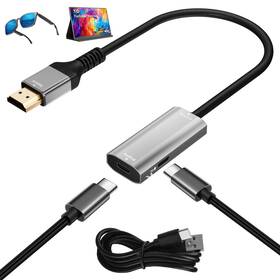
( Brand: Veeloon ), ( Manufacturer Part Number: PD-1F ), ( Part Type: Adapter ), ( Power Plug Type: Type C 2pin Eu ), ( Connector Type: Hdmi, Usb Type C ), ( Input Voltage: 5.0 ), ( Current Rating: 1.0 ), ( Color: Grey ), ( Package Dimensions Lxwxh: 6.5x5.5x0.02 Inches ), ( Weight: 0.15 Pounds )
Review VEELOON V hd c Hdmi Male To Usb Female Adapter 4k 60hz Ar Glasses Unidirectional
The **Veeloon V-HD-C PD-1F** is a high-performance, versatile HDMI-to-USB-C adapter designed to bridge the gap between modern 4K display technology and emerging augmented reality (AR) glasses, offering seamless connectivity for both professional and consumer applications. Engineered with precision, this unidirectional adapter supports **4K resolution at 60Hz**, ensuring crisp, high-definition visuals with vibrant color accuracy and smooth motion handling ideal for immersive AR experiences where clarity and responsiveness are paramount. The **HDMI male-to-USB-C female** configuration allows for effortless integration with a wide range of devices, including AR headsets, laptops, monitors, and other USB-C-equipped peripherals, eliminating the need for bulky or proprietary cables. Built with robust materials and optimized signal integrity, this adapter supports **Power Delivery (PD) 3.0**, delivering stable power transmission to ensure consistent performance without overheating or voltage fluctuations, even during extended use. Its compact yet durable design makes it perfect for on-the-go professionals, developers, or enthusiasts who demand reliability in portable AR setups. Whether used for gaming, virtual reality development, professional media editing, or experimental AR applications, the Veeloon V-HD-C PD-1F delivers a seamless, future-proof connection that adapts to the evolving needs of next-generation display technology.
**Pros and Cons of the Veeloon V-HD-C PD-1F (HDMI Male to USB Female Adapter for AR Glasses, 4K/60Hz, Unidirectional)**
### **Pros:**1. **4K/60Hz Support** The adapter is designed to handle high-resolution 4K content at 60Hz, which is essential for AR glasses that require smooth visuals and minimal lag. This ensures a high-quality display experience, reducing blurriness and improving clarity.
2. **USB-C Power Delivery (PD) Compatibility** The inclusion of Power Delivery (PD) means the adapter can efficiently deliver power to AR glasses, especially those that rely on USB-C for both data and charging. This is particularly useful for devices that require stable power to maintain performance.
3. **Unidirectional Design** The unidirectional setup (likely meaning it supports one-way data transfer or a specific connection protocol) can reduce interference and improve stability, which is critical for AR applications where latency and synchronization matter.
4. **HDMI to USB Conversion** AR glasses often use USB-C for connectivity, but content sources (like laptops or media players) may output via HDMI. This adapter bridges that gap, allowing users to connect HDMI-based devices to AR glasses without additional converters.
5. **Potential Compatibility with AR Glasses** If the AR glasses you own or plan to buy support HDMI input via USB-C (or similar protocols), this adapter could be a straightforward solution for streaming content directly to the glasses.
6. **Compact and Portable** The adapter is likely designed to be small and lightweight, making it easy to carry around for travel or on-the-go use with AR devices.
---
### **Cons:**1. **Limited Use Case Specificity** While the adapter supports 4K/60Hz, not all AR glasses may fully utilize this resolution or require HDMI input. Many AR glasses (e.g., Meta Quest Pro, Magic Leap) primarily use USB-C for both data and power, and their software may not natively support HDMI passthrough. This adapter may only work if the AR glasses have explicit HDMI-to-USB-C conversion capabilities.
2. **Potential Latency Issues** AR applications demand low latency for immersion and comfort. Converting HDMI signals to USB-C (or vice versa) introduces potential delays, which could affect the user experience, especially in interactive or gaming scenarios.
3. **Driver or Software Dependencies** Some AR glasses require proprietary drivers or software to recognize external inputs like HDMI. If the adapter doesn t integrate seamlessly with the glasses software, it may not work as intended or could require additional troubleshooting.
4. **Power Draw Concerns** While Power Delivery (PD) is efficient, some AR glasses may draw significant power, and the adapter s ability to sustain this without overheating or causing voltage fluctuations is unclear. Over time, this could lead to performance degradation or damage to either the adapter or the glasses.
5. **Lack of Active Development or Support** If the adapter is a third-party product without ongoing updates or customer support, issues like compatibility problems or firmware bugs may not be addressed. This is particularly risky if the AR glasses ecosystem evolves rapidly.
6. **Potential for Signal Degradation** Converting HDMI to USB-C (or another format) can sometimes degrade signal quality, especially if the adapter lacks proper buffering or active components to maintain signal integrity. This could result in artifacts, color shifts, or reduced sharpness.
7. **No Active Cooling** If the adapter generates heat during use (especially with 4K/60Hz content), lack of cooling mechanisms could lead to overheating, which may shorten its lifespan or cause malfunctions.
8. **Compatibility Uncertainty** Without explicit confirmation from the manufacturer of the AR glasses, there s a risk that the adapter won t work at all. Some AR glasses may require specific protocols (e.g., DisplayPort Alt Mode over USB-C) that this adapter doesn t support.
---
### **Conclusion:**The Veeloon V-HD-C PD-1F adapter is a technically capable device for converting HDMI signals to USB-C, supporting high resolutions and power delivery. However, its practicality for AR glasses hinges on whether your specific AR device supports HDMI input via USB-C and whether the adapter integrates smoothly with the glasses software and hardware. If your AR glasses rely on proprietary protocols, active drivers, or low-latency connections, this adapter may not be sufficient or could introduce issues like latency or compatibility problems.
For most AR glasses currently on the market (e.g., Meta Quest, Pico, or Magic Leap), the primary connection method is USB-C with built-in processing, and HDMI passthrough is rarely a standard feature. As a result, this adapter is more likely to be useful for niche cases where AR glasses explicitly require HDMI input or for testing purposes rather than as a universal solution.
---
### **Recommendation:**1. **Verify Compatibility First** Before purchasing, check the manufacturer s documentation for your AR glasses to confirm whether they support HDMI input via USB-C or any other external display protocols. If they don t, this adapter may be unnecessary or ineffective.
2. **Consider Alternative Solutions** If your AR glasses support USB-C for content input (e.g., via DisplayPort Alt Mode), look for adapters that directly support that protocol instead. For example, some AR glasses use USB-C to USB-C cables with DisplayPort functionality, which may be more reliable.
3. **Prioritize Low-Latency and Active Solutions** For AR applications, prioritize adapters or solutions that are optimized for low latency and active signal processing. Passive converters like this one may not meet the performance requirements of immersive AR experiences.
4. **Check for Official or Certified Adapters** If the AR glasses manufacturer offers an official adapter or recommends specific hardware, use that instead of third-party options. Official adapters are more likely to be tested for compatibility and performance.
5. **Test with Your Specific Device** If you re unsure, test the adapter with your AR glasses in a controlled environment before committing to purchase. Some adapters work well in theory but fail in practice due to software or hardware quirks.
6. **Explore Software-Based Alternatives** Some AR platforms allow content to be streamed via Wi-Fi or local network connections, bypassing the need for physical adapters altogether. If your setup supports this, it may be a more reliable and future-proof solution.
**Final Verdict:** The Veeloon adapter is a useful tool for general HDMI-to-USB-C conversion but is unlikely to be a drop-in solution for most AR glasses. Only purchase it if you ve confirmed your specific AR device supports HDMI input via USB-C and if you ve tested it successfully. Otherwise, explore alternatives that align more closely with your AR glasses native protocols.
Details:
Compatible with computer hosts, laptops, phone, cameras, monitors, Mac Book, iMac, iPad, Dell, Ass, Hawaii, HP, Leno, etc. Note: unidirectional transmission; signals can only be transmitted unidirectional from HDMI to USB-C display devices. Ideal for AR/XR Glasses Power Port Compatible with AR glasses such as Ranee, XREAL Air formerly Neal Air, Rigid Air, Thunderbird AR, GRAWOOA, etc. The connected USB-C monitor must support video input; otherwise, the image will not display. Compatible with 4K 30Hz, 2K 60Hz, 1080P 120Hz/1080P 60Hz.
Compact size ,easy to carry.Note: Cannot be connected hubs, docks, or KVM switches. Plug and Play This HDMI to USB-C adapter uses newts IC chips, requiring no driver installation simply plug it in start using. Using a USB-C cable that meets USB4, Thunderbolt 3/4/5 specifications. Please insert the HDMI male connector into source device equipped with an port, such as laptops, PS5, Box, TV boxes, etc.
The adapter features a power port that can charge AR/XR glasses while in use; when using monitor/projector, the USB-C simultaneously transmit audio, video. Compatible with portable monitors, USB-C projectors, Google TV, Fire TV Stick, etc. Suitable for connecting mainstream game consoles like Nintendo Switch, PS4, PS5, Box, as well DVD players, Blu-ray Google TV, Fire stick, and other streaming players. And connect the USB-C female connector to display devices like monitors, Creak Air, Neal etc.
Plug and Play, This HDMI to USB-C adapter uses advanced IC chips, requiring no driver installation simply plug it in start using. Enjoy lag-free video and audio synchronization for an immersive entertainment experience. If there is any quality issue, you can get a or replacement.
part #: pd1f prices
- $6.49-$21.04
specifications coaxcabl:
- brand: Veeloon
- mpn: Pd-1f
- part type: Adapter
- power plug type: Type C 2pin Eu
- connector type: Hdmi, Usb Type C
- input voltage: 5.0
- current rating: 1.0
- color: Grey
- package dimensions lxwxh: 6.5x5.5x0.02 Inches
- weight: 0.15 Pounds
shipping coaxcabl:
- type: Fixed
- class: Standard
- cost: $0.00
- transit: 4-9 Days
- service: Standard
offer coaxcabl:
- sold: 0
- started: February 19, 2026
- quantity: 1
- options: Ship-to-home
- availability: In Stock
general coaxcabl:
- condition: New
- Radio Communication > Parts Accessories > Coax Cables Connectors
returns coaxcabl:
- paid by: Seller
- policy: Returns Accepted
- method: Money back
- time: 30 Days
payments coaxcabl:
- credit card: Mastercard
- wallet: Google-pay
- other
seller coaxcabl:
- rating: 100.0%
- # reviews: 16
- city: San Francisco, California
