ACTISENSE EMU-1-BAS Nmea Engine Monitoring Unit Analog 5060998710331 Gateway NMEA2000
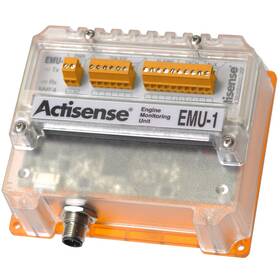
( Brand: Actisense ), ( Manufacturer Part Number: EMU-1-BAS ), ( Type: Cable ), ( Language: English ), ( Voltage: 12vdc ), ( UPC: 060998710331 )
Review ACTISENSE Nmea Engine Monitoring Unit Analog To Gateway
The **ActiSense EMU-1-BAS NMEA 2000 Engine Monitoring Unit with Analog and NMEA2000 Gateway** is a sophisticated, all-in-one diagnostic and monitoring solution designed to provide boat owners, marine professionals, and fleet operators with real-time insights into their engine s performance while seamlessly integrating with modern marine navigation and data systems. Engineered with precision and built to withstand the harsh marine environment, this compact yet powerful unit combines advanced analog signal processing with robust NMEA 2000 networking capabilities, making it an indispensable tool for both recreational and commercial vessels. At its core, the EMU-1-BAS excels in monitoring critical engine parameters such as RPM, oil pressure, water temperature, fuel pressure, and exhaust backpressure, delivering accurate, reliable data that empowers operators to make informed decisions about maintenance, performance optimization, and troubleshooting. The unit s analog input channels allow for direct connection to a wide range of sensors, including traditional mechanical gauges and modern electronic transducers, ensuring compatibility with virtually any engine configuration, from outboard motors to complex diesel setups. Beyond basic monitoring, the EMU-1-BAS serves as a versatile NMEA2000 gateway, enabling seamless communication between the engine s diagnostic data and other onboard systems such as chartplotters, multifunction displays, loggers, and fleet management platforms. This integration eliminates the need for separate interfaces or proprietary software, streamlining data flow and enhancing the overall functionality of the vessel s instrumentation. Whether used for personal yachts, fishing boats, or commercial vessels, the EMU-1-BAS stands out for its ease of installation, user-friendly configuration, and robust build quality, all while adhering to the stringent standards of the marine industry. With its ability to log historical data, set customizable alerts for potential issues, and provide clear, actionable insights, this engine monitoring unit transforms passive observation into proactive engine care, ultimately extending the lifespan of the engine and ensuring smoother, more efficient operations at sea.
**Pros and Cons of buying a ActiSense EMU-1-BAS (NMEA 2000 Engine Monitoring Unit with Analog NMEA2000 Gateway)**
### **Pros**
1. **Comprehensive Engine Monitoring**
The EMU-1-BAS provides detailed real-time monitoring of critical engine parameters such as RPM, oil pressure, water temperature, fuel pressure, and more. This is invaluable for diagnosing issues early and ensuring optimal engine performance.
2. **NMEA 2000 Network Integration**
As a fully compliant NMEA 2000 device, it seamlessly integrates with other marine systems (e.g., navigation, alarms, and displays) via a single network. This eliminates the need for multiple proprietary connections, simplifying wiring and reducing clutter.
3. **Analog Input Support**
The built-in analog NMEA2000 gateway allows the unit to interface with older analog sensors (e.g., tachometers, pressure gauges, or temperature sensors) that may not support digital NMEA 2000. This makes it a versatile upgrade for boats with mixed sensor systems.
4. **Remote Monitoring and Alerts**
The device can be paired with compatible displays, tablets, or smartphones (via third-party apps or dashboards) to monitor engine status remotely. Some systems also support configurable alarms for critical thresholds (e.g., low oil pressure), enhancing safety.
5. **Compatibility with ActiSense and Third-Party Software**
It works with ActiSense s own software (e.g., *ActiSense Monitor* or *ActiSense Cloud*) as well as other marine monitoring platforms like *Navico s NMEA 2000 tools* or *third-party dashboards* (e.g., *MarineView, OpenCPN plugins*). This flexibility allows users to choose the interface that best fits their needs.
6. **Durability and Marine-Grade Build**
ActiSense products are designed for harsh marine environments, with rugged enclosures, corrosion-resistant materials, and reliable electronics. This ensures long-term reliability in wet or vibration-prone conditions.
7. **Scalability for Future Upgrades**
Since it operates on the NMEA 2000 network, adding more sensors, displays, or monitoring units in the future is straightforward. This makes it a future-proof investment for boat owners planning expansions.
8. **Reduced Downtime**
By providing early warnings of potential engine issues (e.g., overheating, low oil), the EMU-1-BAS helps prevent costly breakdowns and extends engine lifespan.
---
### **Cons**
1. **Cost**
The EMU-1-BAS is a premium device, and the initial purchase price along with compatible sensors, wiring, and software can be higher than basic analog-only monitoring systems. This may be a barrier for budget-conscious boat owners.
2. **Learning Curve for NMEA 2000**
While NMEA 2000 is a robust standard, setting it up requires some technical knowledge, especially when integrating multiple devices or troubleshooting network issues. Users unfamiliar with marine electronics may need professional assistance.
3. **Sensor Compatibility Limitations**
Although the analog gateway supports older sensors, not all analog sensors are NMEA 2000-compatible out of the box. Some may require additional adapters or signal conditioning, adding complexity and cost.
4. **Software Dependency**
Full functionality often relies on proprietary or third-party software (e.g., ActiSense apps). If the software is discontinued or incompatible with newer devices, users may face limitations or need to invest in alternative solutions.
5. **Potential Overkill for Simple Installations**
If a boat already has a fully digital NMEA 2000 system with modern sensors, the EMU-1-BAS may offer redundant features. In such cases, a simpler or more specialized unit (e.g., a basic NMEA 2000 engine monitor) might suffice.
6. **Wiring Complexity**
NMEA 2000 networks require proper termination, shielding, and routing to avoid interference. Poor wiring can lead to signal degradation or system failures, which may require professional installation.
7. **Dependence on Network Health**
If the NMEA 2000 network experiences issues (e.g., loose connections, damaged cables, or power fluctuations), the entire monitoring system could fail. This introduces a single point of failure that simpler systems avoid.
8. **Limited Physical Outputs**
Unlike some analog-only systems, the EMU-1-BAS does not provide direct physical outputs (e.g., relays for alarms). Users must rely on software-based alerts or additional hardware for physical warnings.
---
### **Conclusion**
The **ActiSense EMU-1-BAS** is a high-quality, feature-rich engine monitoring unit that excels in providing real-time diagnostics, seamless NMEA 2000 integration, and compatibility with both digital and analog sensors. It is ideal for boat owners who prioritize advanced monitoring, remote access, and long-term scalability, especially those with mixed sensor systems or plans to expand their marine electronics network.
However, its **higher cost, technical setup requirements, and dependency on NMEA 2000 infrastructure** may not justify the investment for users with simpler needs or those unwilling to invest time in learning or maintaining the system. Additionally, those with fully digital NMEA 2000 setups may find more specialized or cost-effective alternatives.
### **Recommendation**
**Buy the EMU-1-BAS if:**- You have a **mixed analog/digital sensor setup** and need a gateway to NMEA 2000.
- You want **comprehensive engine monitoring** with remote access and configurable alerts.
- You plan to **expand your marine electronics network** in the future.
- You are comfortable with **NMEA 2000 installation** or willing to hire a professional for setup.
- You prioritize **durability, reliability, and integration** with ActiSense or third-party software.
**Avoid or consider alternatives if:**- Your budget is limited, and you only need **basic engine monitoring**.
- Your boat already has a **fully digital NMEA 2000 system** with modern sensors.
- You lack experience with **marine electronics wiring or NMEA 2000 networks**.
- You prefer **simpler, analog-only solutions** with fewer dependencies.
For users who meet the criteria above, the EMU-1-BAS is a **strong investment** that enhances safety, efficiency, and peace of mind. For others, evaluating simpler or more specialized units (e.g., a basic NMEA 2000 engine monitor or an analog-only dashboard) may be more practical.
Details:
Share engine information on the NMEA 2000 bus. Easy to configure suit the connected engine. Diagnostic LED Actisense NMEA 2000 Engine Monitoring Unit - Analog to NMEA 2000 Gateway.
Easy installation. The Actisense EMU-1 is a specialized analogue to NMEA 2000 Gateway which converts data from engine gauges/senders into. Alarm Polarity - Configurable, default is alarm on low input. Gauge Inputs.
Total engine hours are logged by the monitoring of Teach RPM input. Optional DIN rail mounting kit available. Technical Specifications: Power Supply.
part #: emu1 prices
- $640.04-$789.33
specifications coaxcabl:
- brand: Actisense
- mpn: Emu-1-bas
- type: Cable
- language: English
- voltage: 12vdc
- upc: 060998710331
general coaxcabl:
- condition: New
- Radio Communication > Parts Accessories > Coax Cables Connectors
shipping coaxcabl:
- cost: $0.00
- transit: 4-9 Days
- class: Economy
- service: Economy
- type: Fixed
seller coaxcabl:
- # reviews: 9377
- rating: 100.0%
- city: Windsor Mill, Maryland
payments coaxcabl:
- wallet: Paypal
- credit card: Discover
- other
returns coaxcabl:
- paid by: Buyer
- policy: Returns Accepted
- method: Money back
- time: 30 Days
offer coaxcabl:
- options: Ship-to-home
- quantity: 2
- availability: In Stock
- sold: 0
- started: June 4, 2026
Actisense EMU-1 Is Similar To:
- Actisense 060998710546 Pro Nmea Buffer 1 Opto Input 6 Iso-drive Outputs Serial Port (28.9% similar) Type approved RNA. The type-approved nmea buffer PRO-NBF-1 isolates and buffers 0183 data, with the power to drive multiple devices. Outputs automatically track the input baud rate. Six ISO-drive outputs. Able to distribute up six identical, amplified streams of data from one source, the nmea ...(June 4th, 2026)
- Actisense Opto-4 Nmea 0183 Pc Opto-isolator Cable Rs232 Db9 Female Shielded (42.3% similar) Quick and easy to install. Add isolation to an RS232 port protect against ground loops. Housing material - PVC black. Shield - internal copper foil. Actisense nmea 0183 pc opt-isolate cable, RS232 DB9 female, shielded. Protects pc input/receiver from damage. Approvals and certifications. Water ...(June 4th, 2026)
