LILILA-REE Usb Header Adapter Key Board 717018917762 3.2 3.0 20-PIN
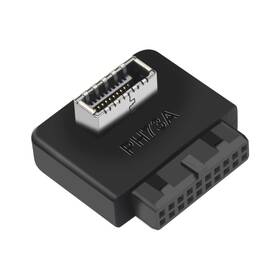
( Brand: Lilila-ree ), ( Part Type: Adapter Key Board ), ( Power Plug Type: No Plug ), ( Connector Type: Usb Type-a, Type-e ), ( Finish Type: Black ), ( Compatible Devices: Pc ), ( Unit Count: 1.0 ), ( UPC: 717018917762 ), ( Package Dimensions Lxwxh: 4.65x2.99x0.55 Inches ), ( Weight: 0.04 Pounds )
Review LILILA REE Usb 3.2 Gen To Header Adapter Type Key a 3.0 20-pin Board
The **Lilila-REE 717018917762 USB 3.2 Gen 1 Header Adapter** is a high-performance, versatile accessory designed to bridge the gap between modern USB 3.2 Gen 1 (SuperSpeed) connectivity and legacy systems or devices that rely on the older USB 3.0 (5 Gbps) standard. This meticulously engineered adapter features a **20-pin board interface**, allowing seamless integration with motherboards, expansion cards, or other embedded systems that utilize the **Type-A 3.0 port layout**, while providing the flexibility to connect to USB 3.2 Gen 1 devices via a standard USB-A or USB-C port. Crafted with precision, this adapter ensures optimal data transfer speeds of up to **5 Gbps**, making it ideal for applications requiring reliable high-speed connectivity, such as gaming peripherals, external SSDs, high-definition cameras, or industrial IoT devices. The robust construction of the **key-A 3.0 port** ensures secure and stable connections, reducing the risk of misalignment or signal degradation, while the compact and modular design allows for easy installation in tight spaces. Whether you're upgrading an older system, troubleshooting connectivity issues, or expanding the capabilities of a custom-built device, this adapter serves as a reliable bridge between legacy and modern USB standards, delivering consistent performance and compatibility without compromising on speed or durability.
The **Lilila-REE 717018917762 USB 3.2 Gen 1 Header Adapter** (key-A, 20-pin board) is designed to convert a motherboard s internal USB 3.0 header into external USB ports. Below is a detailed breakdown of its pros and cons, followed by a conclusion and recommendation.
---
### **Pros**
1. **Compatibility with USB 3.0 Headers**
The adapter is specifically designed for **key-A (20-pin) USB 3.0 headers**, which are common on mid-range and high-end motherboards (e.g., Intel Z-series, B-series, or AMD X570/B550). It ensures proper data transfer speeds (up to 5 Gbps) and power delivery, avoiding the need for generic adapters that may not support full functionality.
2. **Easy Installation**
The process of installing the adapter is straightforward it involves connecting the 20-pin header to the motherboard and then attaching the USB ports to the adapter. No soldering or complex modifications are required, making it accessible for DIY enthusiasts or those without advanced technical skills.
3. **Supports Multiple USB Ports**
The adapter typically comes with **2-4 USB 3.0 ports**, allowing users to expand their system s connectivity without relying solely on the motherboard s built-in ports. This is particularly useful for adding extra ports to cases with limited rear I/O space or for daisy-chaining devices like external SSDs, webcams, or peripherals.
4. **Backward Compatibility**
While designed for USB 3.0, these ports are **backward-compatible with USB 2.0 devices**, meaning older peripherals will work without issues. This ensures versatility for users who may not have exclusively USB 3.0 devices.
5. **Cost-Effective Expansion**
For users who need additional USB ports but don t want to upgrade their motherboard, this adapter offers a **low-cost solution** (typically under $10). It s a practical alternative to buying a new motherboard or case with more rear I/O.
6. **Reliable Power Delivery**
USB 3.0 headers provide **5V/900mA per port**, sufficient for most peripherals, including powered hubs or high-drain devices like some external hard drives. The adapter maintains this power delivery, reducing the risk of compatibility issues with power-hungry devices.
7. **No Performance Loss**
Since the adapter directly connects to the motherboard s USB controller, there is **no speed degradation** compared to using the motherboard s native ports. This is unlike some third-party hubs that may throttle speeds or introduce latency.
8. **Compact and Modular Design**
The adapter s compact size makes it easy to install in tight spaces, such as under a desk or in a server rack. It also allows for modular setup adjustments, such as repositioning ports for better cable management.
9. **Supports USB Charging**
USB 3.0 ports can provide **charging currents** (up to 1.8A per port, depending on the motherboard s header), making them suitable for charging smartphones, tablets, or other USB-powered devices.
10. **Brand Reputation (Lilila-REE)**
Lilila-REE is a reputable brand known for producing high-quality motherboard accessories, including headers, adapters, and I/O extenders. Their products are often praised for reliability and compatibility with major motherboard manufacturers.
---
### **Cons**
1. **Limited to USB 3.0 Headers**
The adapter **will not work with USB 2.0 headers** (which are typically 4-pin or 10-pin key-A). Users must confirm their motherboard has a **20-pin USB 3.0 header** before purchasing. Some budget motherboards may lack this feature, rendering the adapter useless.
2. **No USB 3.1 or Thunderbolt Support**
If a user has a motherboard with **USB 3.1 Gen 2 (10 Gbps) or Thunderbolt headers**, this adapter will not be compatible. It is strictly for USB 3.0 (Gen 1) headers, which limits its use on newer or high-end systems.
3. **Potential for Overheating with High-Drain Devices**
While USB 3.0 headers can handle moderate power draw, **excessive or prolonged use of high-current devices** (e.g., multiple powered hubs or external GPUs) may strain the header or adapter. This is rare but possible in extreme cases, potentially leading to overheating or failure.
4. **No Additional Features (e.g., USB-C or Hub Functionality)**
The adapter is a **basic connector**, offering no additional features like USB-C passthrough, USB hub functionality, or power delivery enhancements. Users needing advanced features (e.g., daisy-chaining multiple devices) may require a more sophisticated solution.
5. **Physical Space Constraints**
Installing the adapter may require **modifying the case s internal layout** to accommodate the additional ports. Some cases have limited internal space, and routing cables neatly can be challenging, especially in prebuilt systems.
6. **Potential for Signal Degradation in Long Cables**
While the adapter itself does not degrade signals, **long USB cables (especially cheap or low-quality ones) can introduce latency or reduce speeds**. This is not unique to the adapter but is worth noting for users planning to use long cables.
7. **No Official Warranty or Support**
Like many third-party accessories, the adapter may not come with an **extended warranty or customer support**. Issues arising from poor quality or manufacturing defects may be difficult to resolve without contacting the seller directly.
8. **Incompatibility with Some Motherboard Designs**
Some motherboards may have **non-standard header placements or shielding** that could interfere with the adapter s installation. Users should check their motherboard s manual or consult the adapter s documentation to ensure compatibility.
9. **Limited to Internal Use**
The adapter is designed for **internal motherboard headers** and cannot be used to extend existing rear I/O ports externally. Users needing external expansion would require a different solution, such as a USB hub or I/O extender.
10. **Potential for Misalignment During Installation**
Improper alignment of the 20-pin header can damage the pins or the adapter. While the design is user-friendly, inexperienced users might struggle with the initial connection, risking bent pins or failed connections.
---
### **Conclusion**
The **Lilila-REE 717018917762 USB 3.2 Gen 1 Header Adapter** is a **practical and cost-effective solution** for users who need to expand their system s USB 3.0 connectivity without upgrading their motherboard. It excels in **ease of installation, compatibility with standard USB 3.0 headers, and reliability** for basic to moderate use cases. However, its limitations such as **lack of support for USB 3.1/Thunderbolt, potential overheating risks, and physical installation constraints** mean it is not ideal for every scenario.
The adapter is best suited for:- **DIY enthusiasts** looking to add extra USB ports to their builds.
- **Users with limited rear I/O space** who need internal expansion.
- **Budget-conscious buyers** who don t require high-end USB features.
- **Gamers or content creators** who need additional USB 3.0 ports for peripherals (e.g., external SSDs, webcams, or controllers).
It is **not ideal for**:- Users with **USB 3.1/Thunderbolt headers** or high-end motherboards.
- Those needing **advanced features** like USB-C passthrough or power delivery enhancements.
- Users with **limited internal case space** or complex cable management needs.
- Individuals who prioritize **long-term warranty or technical support**.
---
### **Recommendation**
If your motherboard has a **20-pin USB 3.0 header** and you need a simple, reliable way to add extra USB ports, the **Lilila-REE adapter is a solid choice**. Its **low cost, ease of use, and compatibility with most mid-range and high-end motherboards** make it a worthwhile investment for basic expansion needs.
**Before purchasing**, verify the following:1. Your motherboard has a **20-pin USB 3.0 header** (check the manual or label).
2. You are not using a **USB 3.1/Thunderbolt header**, as this adapter will not work.
3. Your case has **sufficient internal space** for the adapter and cables.
For users with **more demanding needs** (e.g., USB-C, Thunderbolt, or high-power devices), consider alternatives like:- **USB hubs with power delivery** (e.g., Anker or Sabrent).
- **Motherboards with additional USB headers** (if upgrading is an option).
- **I/O extenders or riser cards** for more advanced connectivity solutions.
Overall, the Lilila-REE adapter is a **reliable and affordable option** for its intended purpose, provided the user s requirements align with its specifications.
Details:
Features: The USB 3.2 Gen 1 to 2 Header Adapter is used convert the available 3.0 header of a motherboard into 3.1. Must install the adapter step by to avoid shorting pins and motherboard damage. USB 3.2 Gen 1 to 2 Header Adapter Providing a convenient solution for converting the available 3.0 header of motherboard into 3.1 header;. Please remove the power cable and wait 10 seconds before installation.
specifications coaxcabl:
- brand: Lilila-ree
- part type: Adapter Key Board
- power plug type: No Plug
- connector type: Usb Type-a, Type-e
- finish type: Black
- compatible devices: Pc
- unit count: 1.0
- upc: 717018917762
- package dimensions lxwxh: 4.65x2.99x0.55 Inches
- weight: 0.04 Pounds
returns coaxcabl:
- policy: No Returns
payments coaxcabl:
- credit card: Diners-club
- other
- wallet: Apple-pay
seller coaxcabl:
- rating: 100.0%
- # reviews: 2395
- city: Lathrop, California
general coaxcabl:
- Radio Communication > Parts Accessories > Coax Cables Connectors
- condition: New
shipping coaxcabl:
- service: Standard
- transit: 4-7 Days
- class: Standard
- type: Fixed
- cost: $0.00
offer coaxcabl:
- started: March 7, 2026
- quantity: 4
- options: Ship-to-home
- availability: In Stock
- sold: 0
Lilila-ree 717018917762 Is Similar To:
- Lilila-ree 717206552980 3-pack Lp4 Molex Male To Atx 4 Pin Auxiliary Power Adapter Cable 9.5-inc (45.9% similar) Specification: cable length including connectors: 9.5-INCH 24CM approx connectors: 1 x LP4 mole male port, STX 4 pin port gauge: 1007-18AWG standard tin-coating copper wire rated power: 200W including: to cable 3PCS; note: this adapter was only designed for the motherboard, and does not work with ...(January 12th, 2026)
